
Train the system, at its source.
GEN builds on the Quertant method (Psycho-Sensory Culture), a neurofunctional regulation approach rooted in the study of the neuro-visual mechanisms that steer the central nervous system.
Why do some people keep burning out despite rest, motivation, training or coaching?
- Neurocognitive overload
- Autonomic nervous system dysregulation
- Insufficient recovery
- Attentional fatigue
- Impaired adaptive capacity
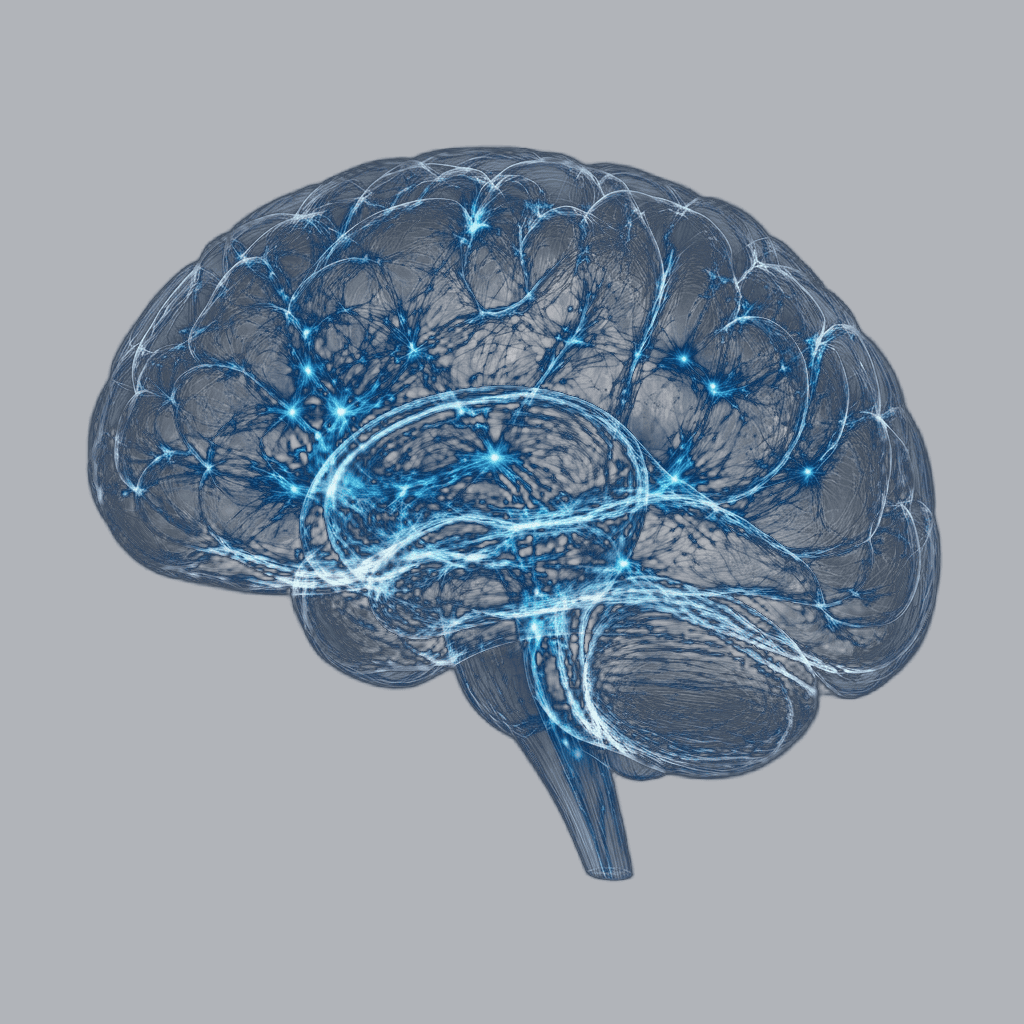
A significant share of information the brain processes travels through the visual pathway. By measuring and then finely training oculomotor coordination with structured, progressive exercises, the nervous system regains a steadier and more efficient regulation.
Neither therapy, coaching, nor relaxation. A neurofunctional training: precise, progressive, measurable.
The principle—
At the source, not the symptom
We act on the regulation function itself, not on its manifestations.
Non-verbal
No narrative, no psychological analysis. An asset for exposed or discreet profiles.
Objectified
An initial assessment and milestones track progress on concrete indicators.
Lasting
The goal isn't a fleeting relief but a regulation that settles in.
Aboutthe method.
Where does the Quertant method come from?+
It was formalised in the first half of the 20th century by Georges Quertant, out of clinical observation of the link between neuro-visual coordination and regulation of the central nervous system. Psycho-Sensory Culture (CPS) has since been refined, structured and transmitted by specifically trained practitioners. GEN sits within that lineage and connects it to the contemporary demands of high-pressure performance and to current insights from functional neuroscience.
Why go through the visual pathway to reach the nervous system?+
Because the visual system isn't just a perceptual organ — it's a direct extension of the central nervous system. A major share of brain activity is devoted to visual processing and to oculomotor coordination. Training that coordination with precision reaches circuits deeply involved in vigilance, attention, posture and autonomic regulation — without needing language or narrative.
What does an exercise actually look like?+
Each exercise uses specific devices to engage targeted neuro-visual mechanisms: fixation, convergence, binocular coordination, light adaptation, precision of gaze. Tasks are short, calibrated, progressive and always adjusted to your level on the day. You don't have anything to tell or analyse: it is a functional, non-verbal work that lets the nervous system reorganise through repeated practice.
What scientific ground does the approach rest on?+
The approach draws on established knowledge in neurophysiology: the central role of the visual system in motor and attentional control, the functional plasticity of the nervous system, and the mechanisms of autonomic regulation. It is a structured, measurable field practice rather than a medical device. The indicators tracked at each milestone objectify progress without any therapeutic claim.
How is it different from neurofeedback or a brain-training app?+
Neurofeedback works on electrical brain signals; brain-training apps drill cognitive tasks on a screen. The Quertant method engages the nervous system through its neuro-visual and postural circuits, in a human, individualised, physical setting. Progress isn't a game score: it is a functional regulation that settles in and transfers naturally into daily life.
Can the method be combined with meditation, therapy or athletic preparation?+
Yes, and it often is. GEN acts on the regulation function; meditation, therapy, coaching, physical or mental preparation act on other registers. The approaches reinforce each other: better regulation typically makes psychological work smoother, athletic preparation more effective and meditative practice more stable. There is no incompatibility, provided your overall support stays coherent.
Do the effects last?+
Yes, once regulation has been sufficiently consolidated. Unlike a fleeting relief, neurofunctional training aims at a stable reorganisation of how the system works — once installed, it persists. Some highly exposed profiles then choose a spaced maintenance rhythm — a handful of sessions per year — to preserve the benefit over time, just as one maintains physical conditioning.
What is the practitioner's role during a session?+
The practitioner runs each session with precision: choice of exercises, calibration of difficulty, close observation of reactions, real-time adjustment. Their role is not to interpret what you experience but to ensure the system is engaged exactly where and how it should be. This quiet, rigorous, measured methodology is what defines the quality of the work.
GEN offers a non-medical regulation and performance support. It does not replace medical or psychological care and can complement it.
BOOK